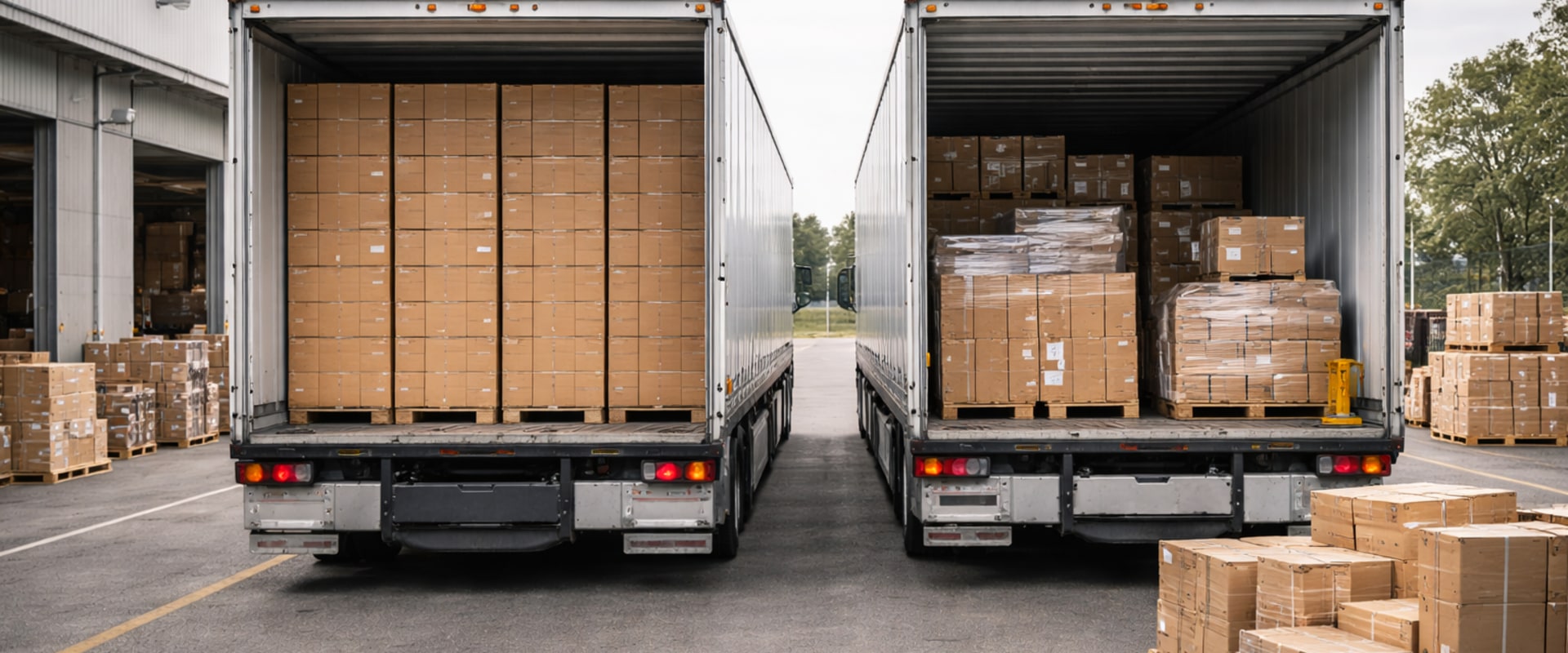
Cargo shipping is a vital component of global trade, facilitating the movement of goods across vast distances. Understanding the various methods of cargo shipping is essential for businesses and individuals alike, as it can significantly impact costs, delivery times, and overall logistics efficiency. Among the most common shipping methods are Less than Truckload (LTL) and Full Truckload (FTL), each serving distinct needs based on the volume and nature of the cargo being transported. LTL shipping is ideal for smaller shipments that do not require an entire truck, allowing multiple shippers to share space on a single vehicle. This method not only reduces costs for businesses with limited shipping needs but also promotes sustainability by maximizing truck capacity.
On the other hand, FTL is designed for larger shipments that fill an entire truck, providing direct transport from origin to destination without the need for multiple stops. This can lead to faster delivery times and greater control over the shipment. As we delve deeper into the differences between LTL and FTL, it becomes clear that choosing the right method is crucial for optimizing logistics operations. Factors such as shipment size, budget constraints, and delivery timelines all play a role in determining which shipping method is most suitable. By understanding these options, businesses can make informed decisions that enhance their supply chain efficiency and customer satisfaction.
What is Cargo Shipping?
Cargo shipping is a vital component of global trade, facilitating the movement of goods across vast distances.It encompasses various methods and modes of transportation, ensuring that products reach their destinations efficiently and safely. Understanding the nuances of cargo shipping is essential for businesses looking to optimize their supply chains.At its core, cargo shipping refers to the process of transporting goods from one location to another, typically using freight carriers. This can involve a range of transport modes, including:
- Air Freight: Fast and ideal for high-value or time-sensitive shipments.
- Ocean Freight: Cost-effective for large volumes, suitable for international shipping.
- Rail Freight: Efficient for bulk goods over land, often used in conjunction with other methods.
- Truck Freight: Flexible and essential for last-mile delivery.
Moreover, the choice between different types of cargo shipping methods can greatly impact cost, delivery time, and overall logistics efficiency.In summary, understanding what cargo shipping entails and the various types available is crucial for any business involved in the movement of goods. By selecting the appropriate shipping method, companies can enhance their operational efficiency and meet customer demands more effectively.
Understanding LTL (Less than Truckload) Shipping
LTL (Less than Truckload) shipping is a freight transportation method that consolidates shipments from multiple customers into a single truck. This approach is particularly beneficial for businesses that do not have enough cargo to fill an entire truck, allowing them to share the shipping costs with others.One of the primary characteristics of LTL shipping is its flexibility. It accommodates various shipment sizes, typically ranging from 150 to 15,000 pounds.This makes it an ideal choice for small to medium-sized businesses that need to transport goods without incurring the higher costs associated with FTL (Full Truckload) shipping.
Benefits of LTL Shipping
- Cost-Effective: By sharing space with other shipments, businesses can significantly reduce their transportation costs.
- Environmental Impact: LTL shipping is more environmentally friendly as it maximizes truck capacity and reduces the number of trips needed.
- Increased Flexibility: LTL services often provide more frequent pickup and delivery options, accommodating varying schedules and needs.
- Access to Advanced Tracking: Many LTL carriers offer tracking services, allowing shippers to monitor their cargo in real-time.
- Retail Shipments: Businesses can send smaller quantities of products to multiple locations without the need for full truckloads.
- Manufacturing Parts: Manufacturers often ship components or parts that do not require a full truckload.
- E-commerce Fulfillment: Online retailers frequently utilize LTL shipping to manage inventory and fulfill orders efficiently.
Understanding FTL (Full Truckload) Shipping
Full Truckload (FTL) shipping is a method of cargo shipping where an entire truck is dedicated to a single shipment. This approach is ideal for businesses that have large volumes of goods to transport, as it allows for a more streamlined and efficient shipping process.One of the primary advantages of FTL shipping is the speed of delivery. Since the truck carries only one shipment, there are fewer stops along the route, which can significantly reduce transit times.This is particularly beneficial for time-sensitive cargo that needs to reach its destination quickly.Additionally, FTL shipping offers enhanced security for the cargo. With only one shipment in the truck, there is less handling involved, which minimizes the risk of damage or loss. This makes FTL a preferred choice for high-value items or fragile goods that require extra care during transport.
When to Choose FTL Shipping
FTL shipping is often the best option in several scenarios:- Large Shipments: If your shipment exceeds 10,000 pounds or fills up a significant portion of a truck's capacity, FTL is typically more cost-effective.
- Time-Sensitive Deliveries: For urgent shipments that need to arrive quickly, FTL provides faster transit times compared to LTL.
- High-Value Cargo: When transporting expensive or delicate items, the reduced handling and dedicated space of FTL can offer peace of mind.
Key Differences Between LTL and FTL Shipping
When it comes to cargo shipping, understanding the differences between LTL (Less than Truckload) and FTL (Full Truckload) is crucial for making informed logistics decisions.Each method has its own advantages and disadvantages, which can significantly impact cost, speed, capacity, and delivery times.
Cost
One of the most significant differences between LTL and FTL shipping is the cost structure:- LTL shipping is generally more cost-effective for smaller shipments. Since multiple shippers share the same truck, costs are distributed among them.
- FTL shipping, on the other hand, is more economical for larger shipments. Although the upfront cost is higher, it can be more efficient for businesses that need to transport a full truckload.
Speed
The speed of delivery can also vary significantly between the two methods:- LTL shipments may take longer due to multiple stops and transfers involved in consolidating freight from various shippers.
- FTL shipments typically offer faster delivery times since the truck goes directly from the origin to the destination without additional stops.
Capacity
Capacity considerations are essential when choosing between LTL and FTL:- LTL shipping is ideal for shipments that do not require a full truckload, usually ranging from 150 to 15,000 pounds.
- FTL shipping is suitable for larger shipments that can fill an entire truck, often exceeding 15,000 pounds.
Delivery Times
The expected delivery times can also differ:- LTL shipping may have longer transit times due to the nature of shared loads and multiple stops.
- FTL shipping usually provides more predictable delivery schedules since it involves direct routes.
Cost Considerations in LTL and FTL Shipping
When it comes to cargo shipping, understanding the cost implications of both LTL (Less than Truckload) and FTL (Full Truckload) is crucial for businesses looking to optimize their shipping strategies.Each method has its own pricing structure influenced by various factors.
Cost of LTL Shipping
LTL shipping is generally more cost-effective for smaller shipments that do not require a full truck. The pricing for LTL is based on several key factors:- Weight and Dimensions: The total weight and size of the shipment significantly impact the cost. Heavier and larger shipments typically incur higher fees.
- Distance: The distance between the origin and destination plays a vital role in determining the overall cost. Longer distances usually result in higher charges.
- Freight Class: LTL shipments are categorized into freight classes based on their density, stowability, handling, and liability.
Higher freight classes can lead to increased costs.
- Accessorial Charges: Additional services such as liftgate service, residential delivery, or inside pickup can add to the overall expense.
Cost of FTL Shipping
In contrast, FTL shipping is often more economical for larger shipments that can fill an entire truck. The cost structure for FTL includes:- Flat Rate Pricing: FTL typically operates on a flat rate based on distance and truck capacity, making it easier to predict costs.
- Fuel Surcharges: Fuel prices can fluctuate, impacting the overall cost of FTL shipping. Carriers often apply fuel surcharges that vary with market conditions.
- Time Sensitivity: If a shipment is time-sensitive, FTL may be more advantageous despite potentially higher upfront costs due to faster transit times.
When to Choose LTL or FTL Shipping?
Choosing between LTL (Less than Truckload) and FTL (Full Truckload) shipping is crucial for optimizing your cargo shipping strategy.The decision largely depends on several factors, including shipment size, urgency, budget constraints, and specific logistical needs.
When to Use LTL Shipping
LTL shipping is ideal for businesses that need to transport smaller shipments that do not require a full truck. Here are some scenarios where LTL may be the best choice:- Smaller Shipment Sizes: If your cargo weighs less than 10,000 pounds or occupies less than 6 linear feet of truck space, LTL is often the most economical option.
- Cost Efficiency: Since you share the truck space with other shippers, you only pay for the portion of the truck your cargo occupies, making it a budget-friendly choice.
- Non-Urgent Deliveries: If your shipment is not time-sensitive, LTL can be a suitable option as it may take longer due to multiple stops along the route.
When to Use FTL Shipping
FTL shipping, on the other hand, is more appropriate for larger shipments or when speed is a priority. Consider FTL in the following situations:- Larger Shipment Sizes: If your cargo exceeds 10,000 pounds or requires the entire truck space, FTL is the way to go.
- Time-Sensitive Deliveries: For urgent shipments that need to arrive quickly, FTL offers direct transport without delays from other stops.
- Simplified Logistics: With FTL, you deal with a single carrier and a straightforward shipping process, reducing potential complications.
FAQs About Cargo Shipping: LTL vs.
FTLWhen it comes to cargo shipping, understanding the differences between LTL (Less than Truckload) and FTL (Full Truckload) is crucial for making informed decisions. Here are some frequently asked questions that can help clarify these concepts:
What is LTL shipping?
LTL shipping is a method used when the cargo does not require a full truckload. This means that multiple shipments from different customers are combined into one truck, allowing for cost savings and efficiency. It’s ideal for businesses that have smaller shipments or less frequent shipping needs.What is FTL shipping?
FTL shipping, on the other hand, is used when a shipment is large enough to fill an entire truck.This method is often preferred for larger shipments as it provides direct transport from the origin to the destination without stops, which can lead to faster delivery times.
What are the cost differences between LTL and FTL?
- LTL: Generally more cost-effective for smaller shipments since you only pay for the space your cargo occupies.
- FTL: Typically more expensive but can be more economical for larger shipments due to the direct route and reduced handling.
How do transit times compare?
Transit times can vary significantly between LTL and FTL:- LTL: May take longer due to multiple stops and transfers as goods are consolidated with other shipments.
- FTL: Usually faster since the truck goes directly from point A to point B without additional stops.
Are there any weight restrictions?
Yes, both methods have weight considerations:- LTL: Typically suitable for shipments weighing between 150 pounds and 15,000 pounds.
- FTL: Generally used for heavier loads, often exceeding 15,000 pounds.
Conclusion: Making the Right Choice in Cargo Shipping
In conclusion, understanding the differences between LTL (Less than Truckload) and FTL (Full Truckload) shipping is crucial for making informed decisions in cargo shipping. Each method has its unique advantages and considerations that can significantly impact your logistics strategy.LTL shipping
is ideal for businesses that need to transport smaller shipments. It allows for cost savings by sharing truck space with other shippers, making it a budget-friendly option for those who do not require a full truckload. However, it may involve longer transit times due to multiple stops and handling, which can affect delivery schedules.On the other hand, FTL shipping is best suited for larger shipments that can fill an entire truck.This method offers faster transit times and reduced risk of damage since the cargo is handled less frequently. While it may come at a higher cost, the benefits of speed and security can outweigh the expenses for many businesses.When deciding between LTL and FTL, consider the following factors:
- Shipment Size: Evaluate whether your cargo can fill a truck or if it’s better suited for shared space.
- Budget: Analyze your shipping budget to determine which option provides the best value.
- Delivery Time: Assess how quickly you need your goods delivered and choose accordingly.
- Type of Goods: Consider the nature of your cargo; fragile items may benefit from FTL due to less handling.